

 Rolex Steel and White Gold Datejust 31 Watch ...


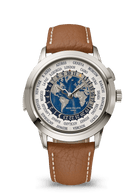


 Patek Philippe Rare Handcrafts Calatrava Minu...


 Audemars Piguet Neo Frame Selfwinding 34mm - ...


 Vacheron Constantin Overseas Dual Time - Stee...


 A. Lange & Söhne 1815 Up/Down - White Gold - ...


 Richard Mille RM 53-02 TOURBILLON SAPPHIRE ⋅ ...


 Omega Speedmaster Milano Cortina 38mm - Steel...


 Cartier Panthère de Cartier Small Model 22mm ...


 IWC Pilot Venturer Vertical Drive 44mm - Cera...


 Tudor Clair de Rose Blue 26mm - Steel and Dia...

 Panerai Luminor Chrono Navy Seals Limited Edi...

"Full set", "box and papers", "watch only": you’ll see these phrases on almost every luxury watch listing. Here’s what they mean, what a complete set includes for each major brand, how to check the papers, and when it’s worth paying more.
What a full set includes
- The warranty card or certificate, the most important item, showing the serial number and often the date of sale.
- The box: inner and outer boxes from the brand, ideally from the right era for the watch.
- Booklets and manuals.
- Hang tags and accessories, such as spare links, a spare strap or the original protective stickers.
- The original receipt, where available, a bonus that adds provenance.
Common listing terms
- Full set. Watch, box, warranty card, booklets and tags, ideally with spare links.
- Box and papers. Usually means the box and warranty card, but not always every accessory.
- Papers only. A watch listed as "papers only" has the card but not the box.
- Box only. The box without the card; the box adds little to value on its own.
- Watch only. No box or papers. Common for older watches, and fine if authenticated and priced accordingly.
- Service papers. Paperwork from a service, not the original warranty card.
Always ask exactly what’s included, and ask to see photos of the card with the serial visible or partly covered.
Why it matters
A full set helps prove a watch’s history and usually adds value, especially for sought-after references. It confirms when and where the watch was first sold, and that the configuration matches what left the factory. It also makes resale easier, because the next buyer gets the same confidence you did. For many collectors, completeness is simply part of the pleasure of ownership: the watch arrives as it did on its first day, with everything the brand intended to come with it.
By brand
Rolex: the warranty card is key; it carries the model and serial number and, usually, the date of sale. Modern Rolex watches also come with a green hang tag marking Superlative Chronometer certification. Patek Philippe: the Certificate of Origin, or an Extract from the Archives for older watches; Patek’s archives go back to the company’s founding. Audemars Piguet: the warranty card, and an Extract from the Archives for vintage pieces. Omega: the warranty card and, on current models, the Master Chronometer certificate; Omega also offers archive extracts. Tudor and Cartier: the warranty card or certificate with the serial number.
How to read a warranty card
Check that the model and serial numbers match the watch exactly, that the date of sale makes sense for the reference, and that the style of card matches the era. Rolex used paper certificates for decades before moving to plastic cards, and the design has changed more than once since. Cards are faked, so a card that looks perfect on a watch that doesn’t check out proves nothing. A dealer stamp or name adds history but isn’t essential.
Service papers
A service record from the brand or a recognised watchmaker is useful in its own right. It shows the watch has been cared for, and sometimes confirms authenticity, since brand service centres won’t service counterfeit watches. It doesn’t replace the original warranty card, but it adds value, especially on older watches.
When watch-only is fine
A watch without papers can be a smart buy if it’s been properly authenticated and the price reflects it. For vintage watches especially, missing papers are common and not a red flag on their own. Many collectors buy watch-only pieces to wear, since the discount for missing papers can be significant on some references.
Keeping your set complete
Store the box, card and accessories together somewhere safe and dry, and keep any spare links; they’re expensive to replace and buyers notice when they’re missing. Photograph the card and keep a copy of your receipt. If you send the watch for service, keep the service paperwork with the set.
Some owners keep the warranty card in a separate safe place from the watch itself. That way, if the watch is ever lost or stolen, the card and its serial number help with police reports and insurance claims, and a thief doesn’t get the papers along with the watch.
Selling with or without papers
If you’re selling, gather everything you have before you ask for a quote: the card, the box, booklets, tags, spare links, receipts and any service paperwork. Even items that seem minor, like the outer box or the hang tag, help complete the picture for the next buyer. If you’ve lost the card, don’t panic. A watch without papers can still be sold for a fair price once it’s authenticated; it simply changes the numbers. Be upfront about what’s missing, because a buyer who discovers it later will trust everything else less.
Buying: what to ask
- What exactly is included? Get a list, not just "box and papers".
- Can I see the card? A photo with the serial partly covered is normal and reasonable.
- Does the serial match? The card, the watch and the rehaut should all agree.
- Is the box correct for the era? A later box is fine but should be disclosed.
- Are spare links included? Especially important if your wrist is larger than the current sizing.
- Any service history? Service papers add useful context alongside the original card.
A good dealer answers all of these without hesitation, and will tell you plainly when something is missing or not original to the watch.
FAQ
Does a full set guarantee authenticity?
No. Papers can be faked; the watch itself must be authenticated.
Can I get replacement papers?
Brands generally don’t reissue warranty cards. Some offer archive extracts for older pieces.
How much value do papers add?
It varies by reference and market. Ask us about a specific watch.
Do spare links matter?
Yes. Missing links can make a bracelet hard to size for the next owner.
Is the original receipt important?
It’s a bonus, especially for provenance, but the warranty card matters more.
Does a later box count?
A box from a different era still completes the presentation, but it should be disclosed. Collectors pay most for the box that came with the watch.
Are papers more important on some watches than others?
Yes. On sought-after modern sports models and precious-metal pieces, papers usually matter more. On vintage watches, originality of the dial and case often matters more than the card.
Should the card show my name?
Not necessarily. Many cards don’t carry a name, and a blank or dealer-stamped card is normal.
If you’re weighing up a watch with or without papers, text us at (310) 363-0481 with the reference and what’s included, and we’ll tell you how the set affects that specific piece.
Shopping for one of these? Every watch we sell is authenticated in Los Angeles, with insured delivery and video on request. Text us at (310) 363-0481.