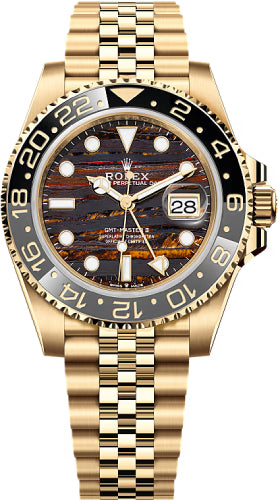


 Rolex Steel and White Gold Datejust 31 Watch ...





 Patek Philippe Rare Handcrafts Calatrava Minu...


 Audemars Piguet Neo Frame Selfwinding 34mm - ...


 Vacheron Constantin Overseas Dual Time - Stee...


 A. Lange & Söhne 1815 Up/Down - White Gold - ...


 Richard Mille RM 53-02 TOURBILLON SAPPHIRE ⋅ ...


 Omega Speedmaster Milano Cortina 38mm - Steel...


 Cartier Panthère de Cartier Small Model 22mm ...


 IWC Pilot Venturer Vertical Drive 44mm - Cera...


 Tudor Clair de Rose Blue 26mm - Steel and Dia...

 Panerai Luminor Chrono Navy Seals Limited Edi...

A Rolex is built to last generations, but like any mechanical machine it needs occasional care. The good news: modern Rolex movements need servicing far less often than older ones. This guide covers how often to service, the signs to watch for, what happens during a service, where to have it done, and how to protect value.
How often
Rolex currently recommends servicing its modern watches roughly every 10 years, depending on the model and how it’s worn. Older Rolex watches, with earlier movements and lubricants, were typically serviced more often. If your watch is running well, there’s no need to service it early, though it’s worth having water resistance checked every year or two if you swim with it.
Older vs newer watches
Modern Rolex calibres, such as the 32xx family, use the Chronergy escapement, Parachrom hairspring and improved lubricants, and are certified as Superlative Chronometers to within −2/+2 seconds a day. They’re designed to run for long periods between services. Older calibres like the 3135 or 3035 are robust but were serviced more frequently. Vintage watches need more care still, and often more specialist attention.
Signs it needs a service
- Timekeeping drifts. It gains or loses much more than it used to.
- Power reserve drops. It stops sooner after you take it off.
- Crown or winding feels rough. Winding or setting the time feels gritty or loose.
- Moisture under the crystal. Have it checked immediately; water damages movements.
- Functions stick. The date, bezel or chronograph doesn’t work smoothly.
- A rattle or noise. Something loose inside the case needs attention.
If a watch has been dropped hard, or exposed to a strong magnetic field and starts running fast, have it checked too.
What happens in a service
A full service typically includes disassembling and cleaning the movement, replacing worn parts and gaskets, lubricating, regulating, and testing water resistance and timekeeping over several days. Case and bracelet refinishing is often offered; on collectible watches, ask for minimal polishing to keep the case sharp. Expect the process to take several weeks.
When the watch comes back, check it carefully before you leave or sign for it: the dial, hands and bezel should be clean and correctly aligned, the crown should screw down smoothly, and the date should change cleanly at midnight on the first night.
Rolex or independent?
A Rolex service centre uses genuine parts and returns the watch with a service guarantee, currently two years. It may replace parts it considers worn, including hands or dials on some older watches. A skilled independent watchmaker can offer more flexibility, for example preserving original parts on vintage pieces. Whichever you choose, ask for any replaced original parts to be returned to you and ask what will be polished before work begins.
Vintage watches
On vintage Rolex, originality is a large part of value. Original dials, hands and bezel inserts with aged lume should be kept, even if replacements look newer. Tell the watchmaker clearly that you want originality preserved, and avoid case polishing unless absolutely necessary.
Servicing and value
A documented service from Rolex or a recognised watchmaker adds confidence and value when you sell. Heavy polishing does the opposite, especially on sports models and fluted bezels where sharp edges are prized. If you plan to sell soon, a service may not be necessary if the watch runs well; ask us before spending money.
Everyday care
- Screw down the crown. Always, after setting the time or winding.
- Mind the date on older models. Avoid setting the date between about 10pm and 2am on older calibres.
- Rinse after salt or chlorine. Fresh water, then dry with a soft cloth.
- Avoid strong magnets. Speakers, tablets and magnetic clasps can affect older watches.
- Store it safely. A watch box or pouch prevents scratches. A watch winder is optional.
Checking accuracy at home
Before deciding a watch needs work, measure it. Set it exactly against a reliable time source in the morning, then compare it at the same time over the next few days while wearing it normally. A modern Rolex should stay within a few seconds a day. If it’s running well outside that, or the rate has changed suddenly, it’s worth having it checked. A watchmaker can test it on a timing machine in a few minutes and tell you whether it needs a simple regulation or a full service.
Position matters too. Watches can run slightly differently depending on how they rest overnight. If yours gains a little, try leaving it dial up; if it loses, try crown up. Small adjustments like this can keep a healthy watch close to perfect without opening it.
Before you send it in
- Photograph the watch. Dial, case sides, lugs, caseback and clasp, so you have a record of its condition.
- Write down the serial. Note the model and serial number and keep the paperwork you receive.
- State your preferences in writing. Polishing, original parts, and whether you want replaced parts back.
- Ask for an estimate first. A reputable service centre or watchmaker quotes before starting work.
- Ship it insured. If you post it, use a fully insured, signature-required service.
Should you service before selling?
Not always. If the watch runs well and has no visible problems, buyers and dealers will usually value it on its condition and papers, and a fresh service may not add as much as it costs. If it has an obvious fault, such as a sticking date or poor timekeeping, it’s worth discussing with the buyer first: some will prefer to handle the service themselves. Above all, avoid having a watch heavily polished just before a sale. An honest, unpolished case is usually worth more than a shiny one with softened edges.
If you’re unsure, text us a few photos and a short description of how the watch is running, and we’ll tell you honestly whether a service makes sense first.
FAQ
Do I need to service a Rolex I never wear?
Movements benefit from running occasionally. Wind it every few weeks.
Does servicing hurt the value?
A proper service helps value; heavy polishing can hurt it on collectible pieces.
Where should I service it?
Rolex service centres or experienced independent watchmakers. Ask us for a recommendation.
Will Rolex keep my original parts?
Ask for replaced parts to be returned; tell them before the work starts.
Is a watch winder necessary?
No. It’s a convenience for automatic watches, not a requirement.
How long does a Rolex service take?
Usually several weeks, sometimes longer if parts need to be ordered or the watch needs extra work.
Does a service reset the warranty?
A Rolex service comes with its own service guarantee, currently two years, covering the work carried out.
My Rolex runs fast after being near a speaker. What happened?
It may have become magnetised. A watchmaker can demagnetise it in minutes, usually without a full service.
Shopping for one of these? Every watch we sell is authenticated in Los Angeles, with insured delivery and video on request. Text us at (310) 363-0481.